
Net-Zero vs. Off-Grid Buildings
Two philosophies and the design decisions that set them apart.
We discuss the need for full lifecycle analysis including: embodied energy and energy payback timelines.
April 2026 · 15 min read
The built environment accounts for roughly 40% of global energy consumption. As Building Designers, engineers, and policymakers grapple with the climate crisis, two compelling design paradigms have emerged: net-zero, grid-connected buildings and off-grid systems. Both pursue sustainability via different avenues, but the two different systematic approaches are attuned programmatically towards different situational outcomes. There are different objectives for electing one method over another and in some cases where sites are remote there’s little choice except to drive for an off-grid solution however we seek to discuss the pro’s & con’s of each method and delve into to full life-cycle analysis including embodied energy.
There are key distinctions between these approaches which may shape procurement strategies, inform investment decisions, and determine a building’s resilience within an increasingly volatile climate. Further, any honest assessment must go beyond operational energy, reckoning the payback data with the energy consumed during construction.
Key Summary:
-
• Produces as much energy as it consumes annually (a basic model of consumption and payback).
• Remains connected to the utility grid as backup.
• Can export surplus energy; earns credits or revenue.
• Lower upfront storage costs; draws from grid when needed.
-
• Fully energy-independent; zero reliance on the utility network.
• Requires substantial on-site storage and redundancy (design for months of low energy yield, high usage).
• May require multiple sources of energy generation (more complexity).
• Higher capital cost but eliminates utility bills entirely.
• Makes uncompromised modern living possible where grid connection is unfeasible.
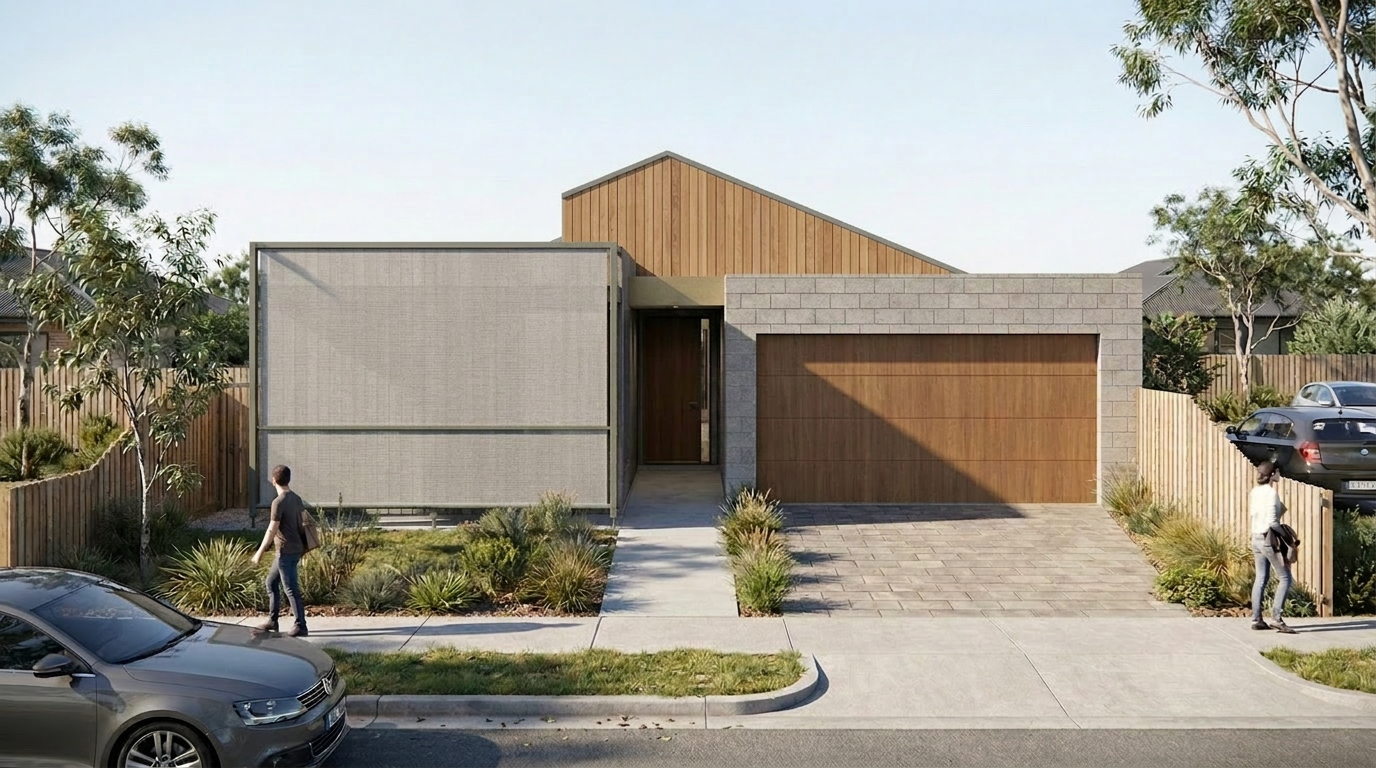
The idea of being connected to the grid
(Image of design concept in development for the 2026 True Zero Carbon Challenge)
Net-zero buildings treat the electrical grid as a trading partner. By designing a building that produces at least as much energy as it consumes over a calendar year, Building Designers and engineers can contribute to better orienting, shaping and programming buildings to rely on renewable generation as much as possible - exporting on sunny summer afternoons, drawing back on dark winter evenings - while maintaining occupant comfort.
This philosophy permits a lighter touch for on-site energy storage systems (such as batteries, heated or cooled floor slabs or other thermal mass).
Because the grid absorbs surplus and provides backup, a net-zero building need not size its battery systems for absolute worst-case scenarios (such as days without sun or wind). Design for lower energy consumption is relevant to both methods however with grid connections there’s fewer scenarios where scarcity drives the requirement for redundancy. These basic concepts carry throughout:
· High-performance thermal envelopes
· Natural daylighting
· Passive heating strategies with low energy fresh air intake.
· Smart low-energy mechanical systems coupled with air-tightness etc.
In Australia as in other countries, our building codes have recently been updated to account for Net-zero. The National Construction Code 2022 introduced allowances for onsite energy generation to offset energy consumption. In order to produce any star rating the main compliance method used to demonstrate minimum efficiency, NATHER’s, nowadays requires all equipment to be elected during the design stage but also allows for ratings to be increased where renewable energy is implemented. (This allowance is an acknowledgement of the fact that energy which is fed back to the grid, benefits everyone at large).
“Can we build in such a way that the more buildings we build, the better off we are, as opposed to what we have now, which is almost the exact opposite?”
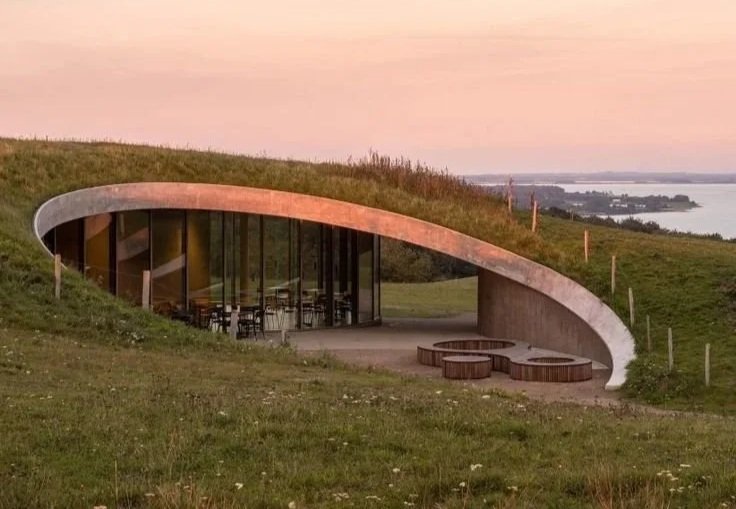
The idea of being disconnected from the Grid
Earth-berm structure with green-roof:
Off-grid buildings in many cases are the result of perceivable necessity. In remote rural locations, disaster-prone regions or countries with fragile grid infrastructure, grid independence is a practical choice. Increasingly though, off-grid design is a deliberate strategic choice even where grid connection is available. These choices are part of a movement of self-reliance which is intrinsically linked to concepts of sustainability, albeit on a smaller scale. Thematically speaking however, larger self-sustaining systems are also possible and some people are even pursuing larger scale off-grid design in the form of modern bunkers as part of disaster planning. This even brings to mind sci-fi styled dystopia and the newly termed ‘preppers’ for those who are preparing for a worst-case scenario future~.
~For those who love distopian sci-fi, check out the book and Apple TV series Silo.
Regardless of scale, the design implications are distinct: every watt must be accounted for. Greater precision in respect to calculating loads for all services is crucial because there is no utility backstop. Demand reduction is not simply economically attractive - it is structurally required. Storage must be sized for the longest expected period of low-power generation (three to seven days in temperate climates) which significantly increases battery capacity and cost.
The good news is that with battery technology having improved so much recently, affordable and scalable modular systems are now readily available in which case off-grid proposals are more viable than ever.
“it emphasises how much — or how little — you need for a few people to survive and thrive. A handful of animals, enough water and year-round crops.”
NET-ZERO / GRID-CONNECTED - Key design considerations
•Envelope: High-performance building envelopes - double or triple-glazed windows, continuous insulation, and rigorous air sealing - minimise the load that renewable energy must offset. Passive House-adjacent standards are common, targeting airtightness below 0.6 ACH50.
•Generation: Rooftop and facade-integrated photovoltaics are sized to match annual consumption. Building-integrated photovoltaics (BIPV) can substitute conventional cladding, turning the entire south-facing facade into a generator without adding visual bulk.
•HVAC: Air-source or ground-source heat pumps, coupled with heat recovery ventilation, dramatically reduce heating and cooling loads. The combination can cut HVAC energy by 60–80% versus a conventional baseline.
•Controls: Grid-interactive smart controls allow the building to shift flexible loads - EV charging, dishwashers, water heating - to periods of low grid carbon intensity or peak solar generation, maximising both economic and environmental return.
•Metering: Bidirectional meters and sophisticated submetering enable granular energy accounting, supporting certification schemes such as LEED Zero Energy, BREEAM Outstanding, and the Living Building Challenge.
•Urban fit: Because the grid handles backup supply, net-zero buildings integrate naturally into dense urban contexts where on-site storage land is scarce and utility infrastructure is already present and amortised across many users.
OFF-GRID SYSTEMS - Key design considerations beyond energy efficiency.
•Generation mix: Robust off-grid systems rarely rely on a single source. Solar PV is typically paired with small wind turbines, micro-hydro where available, or backup diesel or biodiesel generators*. This diversification guards against extended low-generation weather events.
•Storage: Batteries are typically sized for three-to-seven-day autonomy, often supplemented by thermal storage (hot water tanks, phase-change materials). Lithium type batteries are favoured overall for their cost, reliability etc. Ref’1.
•Loads: Load management is granular and often automated. DC-coupled appliances, LED lighting throughout, induction cooking, and highly efficient refrigeration are specified as standard. Phantom loads are rigorously eliminated at the design stage.
•Water: True off-grid buildings typically address water and wastewater independently as well. Rainwater harvesting, filtration systems, composting toilets, and constructed wetland grey-water treatment may need to be integrated into a holistic resource loop.
•Resilience: In the event of extreme weather, grid failure, or natural disaster, an off-grid building continues to function normally. This is a significant and increasingly valued asset for critical facilities, remote communities, and climate-vulnerable locations. (Any home or building with whole-of-home backup batteries can do this also).
•Bioclimatic: Smartoff-grid designs should be calibrated to local climate and be site-responsive - maximising passive solar gain in winter, deploying thermal mass for overnight heat storage, and using natural ventilation to eliminate cooling loads where possible#.
Ref 1. Article: https://www.large-battery.com/blog/lithium-battery-types/
*The global fuel crisis of 2026 is a reminder to those pursuing off-grid solutions that energy independence is complex and power generators aren’t a cheap form of back-up and may even be unreliable solutions. Certainly storing petrol or diesel on site is a combustible hazard.
# If Mechanical Heat Recovery Ventilation (MHRV) is integrated, natural cooling via the opening of windows isn’t required and can even work against automated temperature controls which is a reason people don’t like air-conditioning in commercial office buildings - because you can’t just open a window.
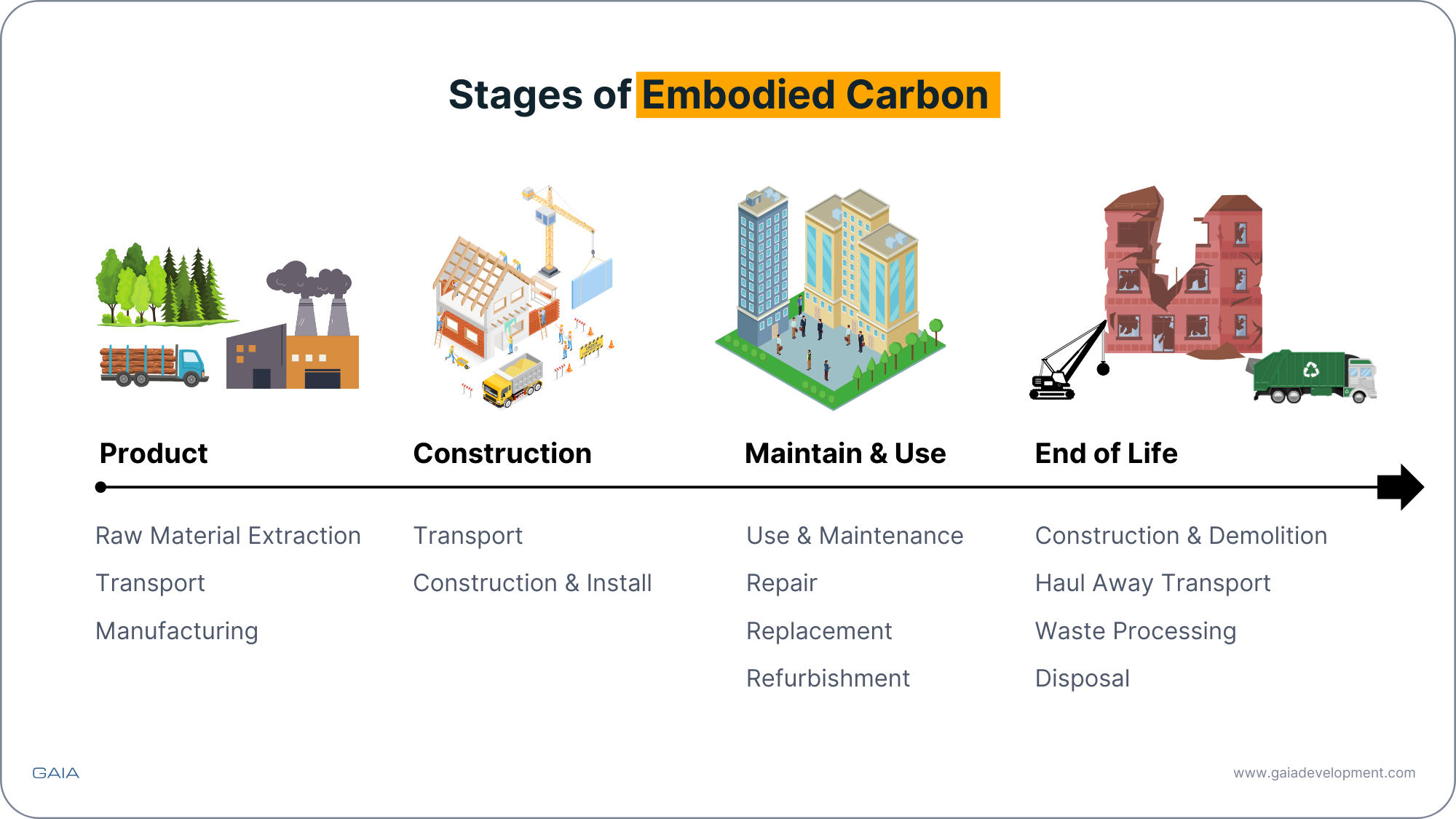
THE HIDDEN DEBT - Embodied energy, lifecycle & the construction debt
Operational energy - the electricity and heat a building consumes year on year - is the headline number in most sustainability assessments. But it tells only half the story. Before a single occupant sets foot inside, a building has already consumed enormous quantities of energy: in the extraction of raw materials, the manufacture of components, the transportation of goods to site, and the construction process itself. This is embodied energy, and it represents a debt that must be repaid before a building's green credentials can be considered genuine.
For highly insulated, technology-rich buildings of either type - net-zero or off-grid - embodied energy is a particularly pressing concern. The very materials and systems that reduce operational energy (thick insulation, triple glazing, solar panels, battery banks) are themselves energy-intensive to produce. This creates a central tension in sustainable building design: the more ambitious the operational efficiency target, the larger the upfront embodied energy investment tends to be. That’s why it helps to look at the bigger systems that buildings are a part of, such as the electrical grid.
“Sustainability is not cinnamon, you can’t just sprinkle it on top. It needs to be baked into every aspect of a project.”
What embodied energy encompasses.
Embodied energy is typically broken into several phases across a building's full lifecycle. The construction phase – equal to 'cradle to practical completion' - is the most immediately relevant, but end-of-life considerations are increasingly being folded into whole-life carbon assessments.
• Materials: The extraction, processing, and manufacture of structural materials (steel, concrete, timber, masonry) typically accounts for the largest share of embodied energy - often 60–80% of the construction-phase total. Concrete and steel are particularly energy-intensive; sustainably sourced timber is significantly lower.
• Transport: Delivery of materials to site, especially for remote off-grid locations, can add meaningfully to embodied energy totals. Locally sourced and minimally processed materials dramatically reduce this component.
• Construction: On-site energy use - plant machinery, temporary power, heating during construction - contributes a smaller but non-trivial share, typically 5–15% of construction-phase embodied energy.
• Systems: Mechanical, electrical, and renewable energy systems carry significant embodied energy loads. A typical rooftop solar array embodies roughly 1,000–2,000 kWh per kWp installed. Large battery systems add further, with lithium-ion manufacturing carrying approximately 100–200 kWh of embodied energy per kWh of storage capacity.
• Replacement: Unlike the building structure - which may last 60–100 years, equipment require replacement during a building's operational life, adding recurring embodied energy charges to the ledger. Solar panels (25–30 years+), batteries (15 years+), and mechanical systems (15–25 years typically).
Energy payback periods compared:
-
No payback - energy debt grows over lifetime
-
~10 years+
-
~10–18 years
-
~8–14 years
-
~15–25 years
How the two methods compare on embodied energy for typical construction payback periods:
Net-zero (grid-connected) : 5–18 years
Off-grid: 8–25 years
Battery costs.
The single largest embodied energy liability in off-grid buildings is the battery system – and with current technology, for those who are installing now or who have already installed after 2020, at least one upgrade is likely to be required (at end of Warranty) but we can expect to see maturation of powerful new modern batteries by around 2035-2040 - in that same timeframe of 14-15 years, this technology will improve significantly resulting in longer lasting, safer, cheaper batteries (and hopefully modularised to suit existing systems).
Lithium-ion battery manufacturing is an energy-intensive industrial process, drawing on mining of lithium, cobalt, nickel, and manganese, followed by cell manufacturing in facilities with enormous energy demands. A typical off-grid residential installation might require a minimum of 20–40 kWh of storage capacity, embodying between 2,000 and 8,000 kWh of manufacturing energy.
With battery lifespans now confidently out to 15 years and with the expectation that the rate of testing for Lithium’s useful life could be double or triple the warranty period, an off-grid building designed for a 60-year life may require several battery replacements however this is dependant upon many factors including what new technology brings.
Rework, renovations and battery replacements refresh the embodied energy payback, the ongoing embodied energy burden does need to be considered, however should we achieve the planet living in a Net-Zero future, all industries would be carbon-neutral, so that battery will also be considered to be carbon-neutral.
Battery technology is improving rapidly - both in energy density and in manufacturing efficiency. Second-life battery programmes, which repurpose electric vehicle battery packs into stationary storage applications, can dramatically reduce the embodied energy of replacement cycles whilst lifecycle assessments can account for these recurring costs.
And yet in payback terms human’s need not be thinking just in terms of economic cost, but instead in terms of the broader sociological cost; with priority given to strengthening systems that support longevity of life on earth.
Net-zero buildings and the grid carbon dividend
Net-zero grid-connected buildings carry a structural advantage that is easy to overlook: as the electricity grid decarbonises, the embodied carbon of grid-sourced electricity falls automatically. A net-zero building connected to a grid that is 80% renewable effectively carries a fraction of the operational carbon burden of the same building connected to a coal-heavy grid.
If the grid's carbon intensity halves over the next 20 years - a plausible trajectory in many jurisdictions - the energy payback period for a net-zero building effectively shortens over time. Off-grid buildings, by contrast, must rely entirely on their own generation and storage systems, which carry fixed embodied energy costs regardless of what happens to the broader energy system because in those cases lifecycle is economically and physically separated from the power grid.
Materials specification is the most effective way to reduce embodied energy
The greatest impact we as Building Designers can have in shortening the embodied energy payback period is in the selection of materials.
Structural material choices can swing embodied energy totals by 30–50%, dwarfing the impact of many operational efficiency measures. In which case this is what we try to keep in mind for our clients:
• Avoid: Reinforced concrete and structural steel carry the highest embodied energy loads of common structural materials - typically 1.5–2.5 GJ per tonne for concrete and 20–35 GJ per tonne for primary steel. Both are ubiquitous and often specified by default instead of alternatives.^
• Prefer: Cross-laminated timber (CLT) and glulam structures carry embodied energy figures of roughly 8–12 GJ per tonne - and if sourced from certified sustainable forests, they also sequester carbon, potentially making the structural frame a net carbon sink.
• Consider: Natural insulation materials - sheep's wool, hemp, cellulose, and cork - carry substantially lower embodied energy than petrochemical-derived rigid foam boards. (higher thermal performance is generally associated with the density of fossil-fuel foams however).
• Balance: Thermal mass from materials such as rammed earth, stabilised earth blocks, and recycled concrete aggregate can carry low embodied energy while providing passive thermal regulation - a double dividend for both building types.
^The use case for steel which can support more for less, makes it harder to remove in larger scale projects, though not impossible. Some older engineers also posture that excessive steel volumes are specified by younger engineers ‘without necessity’. This may be due to the reserved nature of the AEC industry, tending more towards caution and redundancy than scarcity.
A summary of key considerations when selecting the most suitable method:
Cost Profile:
Net-zero grid-connected buildings typically carry a construction cost premium of 5–40% over conventional buildings. Contiguously, the higher upfront quality should be lowering ongoing consumption too, with initial expenditure offset by reduced utility bills or even energy export income sourced from renewables.
Off-grid buildings carry the same suite of costs but potentially higher upfront premium - often 20% more again - due to oversized generation and storage systems, but they do eliminate ongoing grid charges.
Site Suitability:
Net-zero approaches are well-suited to urban and suburban sites with existing grid infrastructure.
Off-grid systems are essential for remote sites but are increasingly chosen as a resilience strategy in semi-rural and peri-urban contexts.
Occupant Behaviours:
Both typologies require occupants to be more energy-aware than conventional buildings but off-grid occupants need more caution and power additional generation options. This demands either sophisticated automation or a more actively engaged occupant.
Embodied Energy Payback:
Net-zero grid-connected buildings generally achieve shorter embodied energy payback periods, not only because they avoid the large battery banks that dominate off-grid embodied energy buildings but also since their contribution to the grid strengthens the complexity in the grid allowing for more fractured management, but also every connection shortens the distance to the next.
For residential scale builds, a well-designed off-grid home using timber structure, natural or recycled insulation, can achieve reasonable payback periods. Energy Generation and storage can be added later to repay the ongoing consumption and embodied energy debts.
Conclusion:
Neither net-zero grid-connected buildings nor off-grid systems are inherently superior. They are answers to different questions. Net-zero design asks: how do we contribute clean energy to a shared system while consuming as little as possible? Off-grid design asks: how do we create a building that is entirely self-sufficient, resilient, and independent of external infrastructure?
The honest answer is rarely flattering in the short term. Even the best-performing sustainable buildings carry construction-phase embodied energy debts that take years - sometimes decades - to repay through operational savings and generation. This is not a reason to abandon ambition; it is a reason to make material choices, system specifications, and design decisions with the full lifecycle firmly in view.
The buildings that will perform best across all dimensions - those with operational efficiency, grid interaction, resilience, and embodied energy payback - are those designed from the outset with material humility: choosing lower-embodied-energy structures, right-sizing technology systems, planning for component replacement cycles, and treating the grid (where connected) as a shared resource in a decarbonising system.
The buildings of the future will not simply consume - they will generate, store, share, and adapt. But first, they must pay their debts. The payback times are lengthy but worthwhile and so we need to train the collective energies of all industries to becoming carbon neutral.
At Harmonic Design, we’re trying to help make the cost of Low Carbon / No Carbon homes a reality to our clients. In 2022 we participated in the True Zero Carbon Competition run by Design Matters National.

The payback period calculated for a return of all carbon used from construction and use was calculated to be reached within 16 years, going positive in the 17th year.
We’re currently working through a new competition entry for 2026. Both of these sophisticated Net-zero home templates will be available to purchase from Module-R.design.